
Vardzia, Rabati and Borjomi: Georgia's Southern Route by Car (2026)
Drive Georgia's southern route: Borjomi's springs, Rabati fortress and the Vardzia caves in two days. Roads, entry fees and the right rental car for 2026.
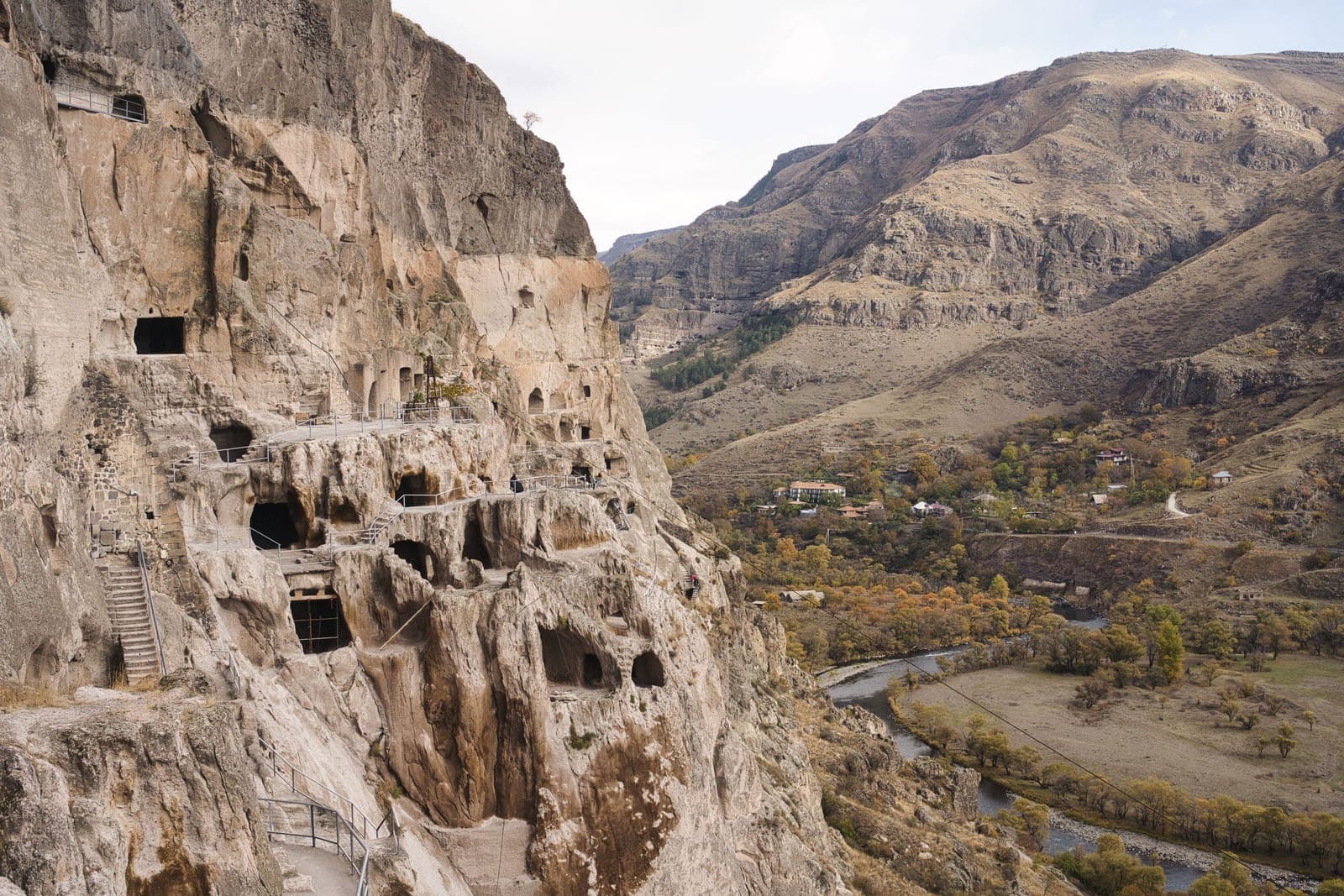
Everyone drives north from Tbilisi. The Military Highway gets the crowds, Svaneti gets the drama, and meanwhile the road south quietly holds one of the most extraordinary places in the country: Vardzia, a twelfth-century city of several hundred caves carved into a sheer cliff above the Mtkvari river. On the way there you pass a spa town that gave its name to the most famous mineral water in the former Soviet world and a hilltop Ottoman fortress that looks lifted from a storybook. This is Georgia's southern route - Borjomi, Akhaltsikhe, Vardzia - and it deserves two days of your trip.
The best part: this is the easiest big route in Georgia to drive. Every kilometre from Tbilisi to the Vardzia car park is asphalt, there are no mountain passes to worry about in summer, and the sights are spaced so evenly that you are never in the car longer than an hour and a half. Our 7-day Georgia itinerary ends with a teaser toward Gori and Uplistsikhe - this post is where that thread leads. Updated for September 2026.
The route at a glance
- The loop: Tbilisi - Borjomi (160 km) - Akhaltsikhe (50 km) - Vardzia (60 km), then back the same way or over the Javakheti plateau. About 550 km in total for the full circle.
- Road surface: paved the entire way, including the final gorge stretch to Vardzia. No 4x4 required - this and our Tbilisi day trips are the routes where any car in the fleet works.
- Timing: doable as one very long day (12+ hours), but built for two days with a night in Akhaltsikhe or Borjomi. Vardzia alone deserves 2 to 3 hours.
- Entry fees (2026): Vardzia 15 GEL, Rabati fortress 20 GEL (museum 15 GEL extra), Khertvisi fortress free from the outside, Borjomi Central Park free. Carry some cash for the small stuff.
- Fuel: fill up in Tbilisi or Khashuri. There are stations in Borjomi and Akhaltsikhe, but between Akhaltsikhe and Vardzia the gorge has essentially nothing - start that leg with half a tank or more.
Tbilisi to Borjomi: the easy warm-up (160 km)
Leave Tbilisi on the east-west highway - the same road every route in Georgia seems to begin with - and cruise past Mtskheta and Gori on smooth dual carriageway. At Khashuri, about 90 minutes in, turn south onto the S8 and the trip changes character: the road narrows to two lanes and follows the young Mtkvari river up a wooded valley that slowly closes in around you. Count on 2 to 2.5 hours of driving to Borjomi without stops.
If you skipped Gori and Uplistsikhe on a day trip, they sit right on this road and make natural stops - the cave town pairs nicely with Vardzia as a before-and-after of Georgian rock cutting. Both are covered in detail in our day trips from Tbilisi guide. Otherwise push on: the good stuff is ahead.
Borjomi: taste the water at the source
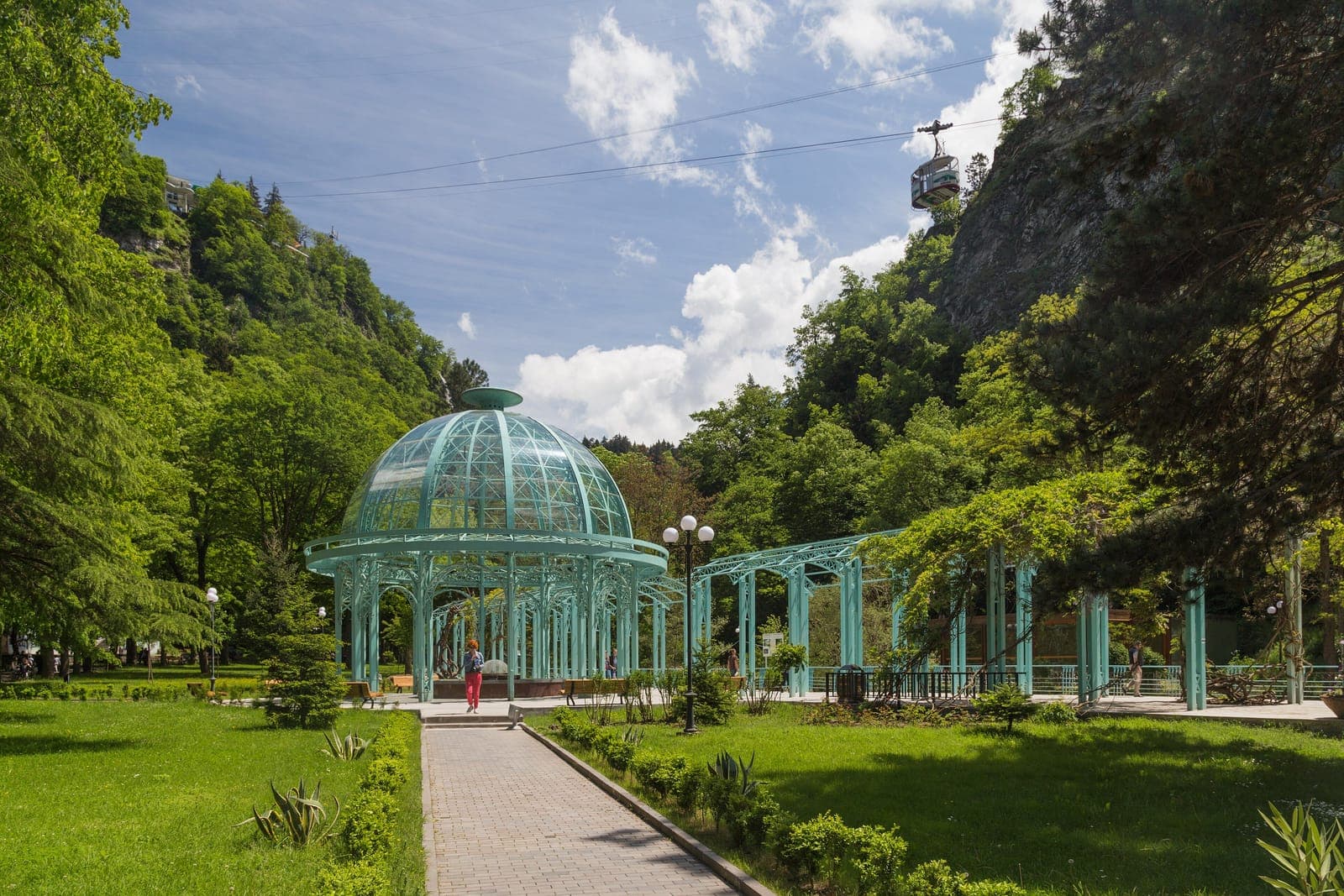
Borjomi is a Belle Epoque spa town squeezed into a green gorge, and its heart is Central Park - entry is free as of 2026, after years of a token fee coming and going. Walk past the gingerbread pavilions to the domed spring and try the famous water warm, straight out of the volcanic rock at around 35 degrees. Honest note: it tastes strongly of sulphur and minerals, and half of all visitors pull a face. Fill a bottle anyway - it is free here and it grows on you. A cable car (a few lari) rattles up to a plateau with a Ferris wheel and a pine-forest view over the town.
If you have an extra hour, walk 2 km deeper into the park along the river to the open-air mineral water pools (5-10 GEL) - warm, slightly blue, surrounded by forest. In summer they are busiest late afternoon, so a morning dip works better. Then get back on the road: Akhaltsikhe is only 50 minutes further on good asphalt.
Akhaltsikhe and Rabati fortress (50 km)
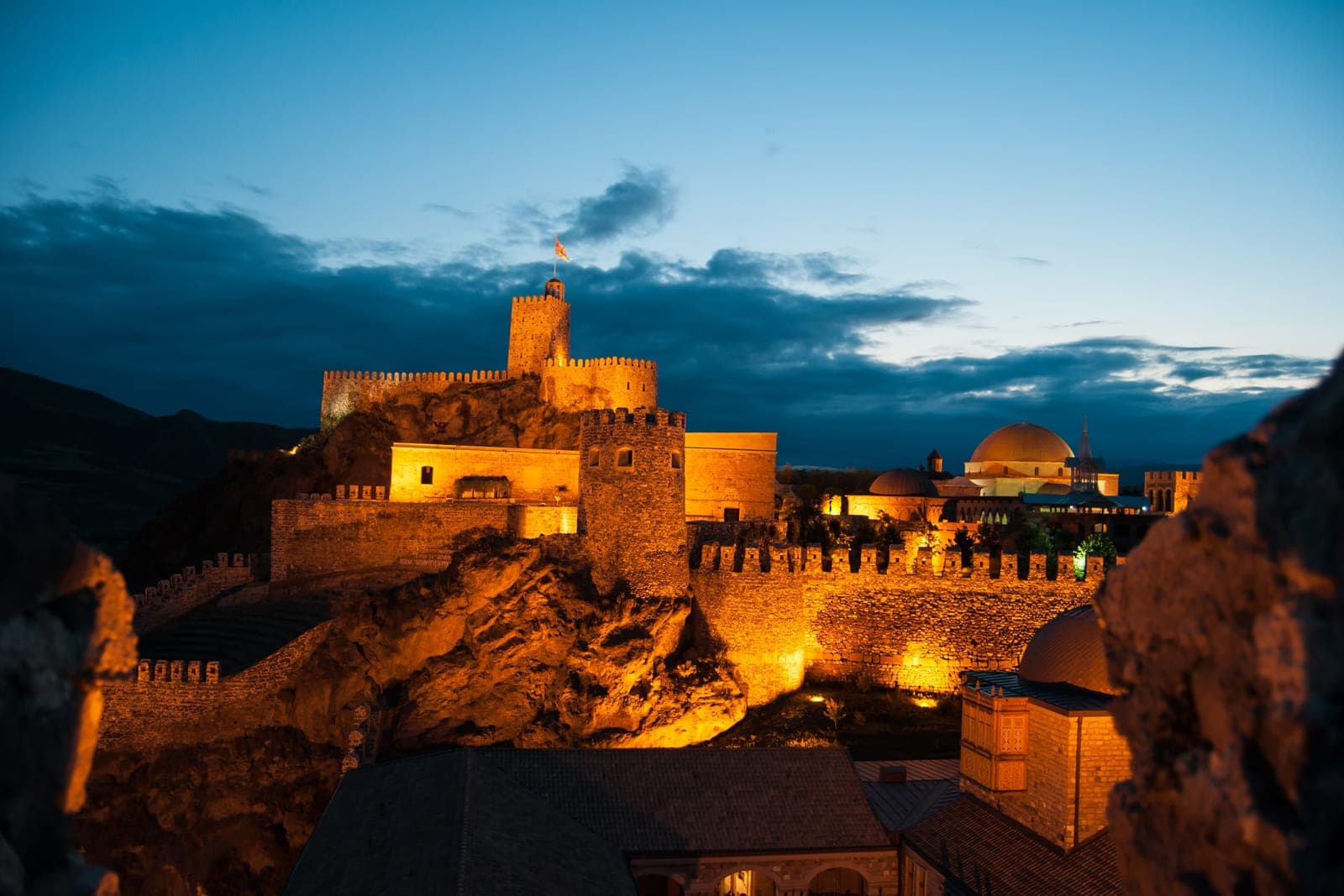
Akhaltsikhe is the workaday capital of the Samtskhe-Javakheti region, and on the hill above it stands Rabati - a sprawling fortress complex with pale stone walls, a golden-domed mosque, gardens, towers and a castle keep. What you see today is largely a 2012 reconstruction, and purists grumble that it is too polished. Ignore them for an evening: as a place to wander at sunset with a fortress rampart underfoot and storks circling the minaret, it is simply good fun. The lower courtyard with cafes and shops is free; the upper historic zone costs 20 GEL, plus 15 GEL if you add the museum. Open 09:00 to 20:00 in season.
Akhaltsikhe is also the smart overnight base: it is an hour closer to Vardzia than Borjomi, guesthouses are plentiful and cheap, and several look straight at the lit-up fortress. Sleep here, start early, and you will have the caves almost to yourself before the tour buses arrive from Tbilisi around noon.
The gorge road: Khertvisi, Tmogvi and the run to Vardzia (60 km)
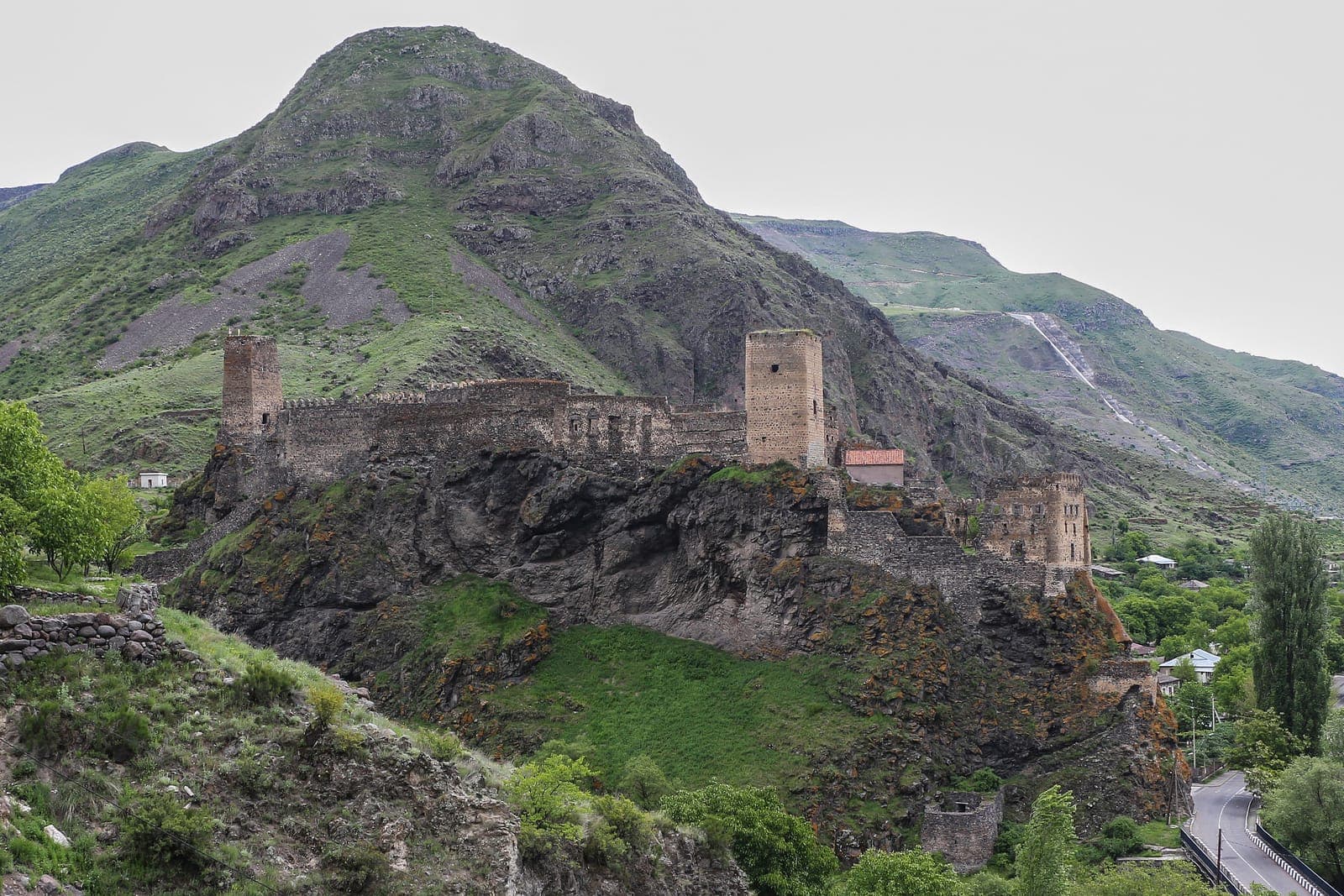
The final leg is the best driving of the trip. The road follows the upper Mtkvari through a volcanic gorge - basalt cliffs, poplar rows, beehives and villages where cows own the right of way. It is paved the whole distance with a few moderate switchbacks, fine for any car; just take it calmly and watch for livestock after every blind bend. After about 45 minutes, Khertvisi fortress appears on a crag exactly where the Paravani river meets the Mtkvari - a tenth-century pile so photogenic it is worth a stop even if you only shoot it from the pull-off below. Climbing up is free most days, and the towers frame the two valleys perfectly.
From Khertvisi it is 16 km to the caves. Along the way you pass the hilltop ruins of Tmogvi castle across the river and the older cave complex of Vanis Kvabebi - note that Vanis Kvabebi has been closed to visitors for several years because of rockfall risk, so don't plan around it. Then the valley opens, the cliff rears up on your left, and suddenly the whole honeycomb face of Vardzia is above you.
Vardzia: two hours inside a cliff
King Giorgi III began the fortress city in the 1150s and his daughter, Queen Tamar, turned it into a monastery town of legend: at its peak Vardzia ran thirteen storeys deep into the rock and could shelter tens of thousands of people, with wine cellars, bakeries, a pharmacy and an irrigation system. An earthquake in 1283 sheared off the outer wall of the cliff, which is why today the city stands in cross-section, hundreds of rooms open to the valley like a doll's house. At the centre, behind a bell tower, the Church of the Dormition keeps its 800-year-old frescoes, including a rare portrait of Tamar painted in her lifetime. A handful of monks still live and pray here.
Practicalities: entry is 15 GEL, and the site is open daily, 10:00 to 19:00 in summer, closing earlier off-season. From the ticket office you walk up a path (or pay a couple of lari for the shuttle) and then work your way down through the caves, tunnels and staircases - some passages are genuinely narrow and dark, which is half the joy. Wear real shoes, bring water, and give it 2 to 3 unhurried hours. Afterwards, if your legs ask for a reward, a basic sulphur pool sits by the river a kilometre downstream from the site - a few lari, zero glamour, oddly perfect.
The way back: fast road or the high plateau
The simple return retraces the gorge to Akhaltsikhe and the valley to Khashuri - about 4 hours from Vardzia to Tbilisi, all familiar, all asphalt. But if it is summer and you started early, there is a wilder option: turn southeast past Khertvisi and climb onto the Javakheti plateau, a treeless volcanic highland of lakes and Armenian-speaking villages at 2,000 metres that feels like a different country. The paved route runs past Paravani, Georgia's largest lake, then north through Tsalka toward Tbilisi. It adds an hour or two but swaps a repeat for one of the least-touristed landscapes in Georgia - and it passes close to Dashbashi canyon, the glass-bridge gorge from our day-trips guide.
One honest caveat about the plateau loop: it is a fair-weather road. Javakheti winters are brutal - this is the coldest inhabited corner of Georgia - and fog, ice or snow can appear on the high sections from October through May. Off-season, or in any doubtful forecast, just take the valley road back. Our driving in Georgia guide covers the winter rules that apply everywhere.
Which car, and the money part
Because the whole core route is paved, this is one of the few big Georgian itineraries where the car choice is about comfort, not capability. A Toyota Prius does it cheaply on asphalt; a compact 4WD like the Jeep Renegade, Subaru XV or Subaru Forester adds ground clearance for village lanes, confidence in a mountain downpour, and freedom to take the plateau loop without a second thought. A Toyota 4Runner is honestly more than this route needs - save it for the roads that demand it. Browse the current fleet and prices at our cars page.
- No deposit, no prepayment: you book free and pay at pickup, cash or card (card +3%). Full details in our deposits and insurance guide.
- Free kilometres: the 550 km loop costs you nothing beyond fuel - no mileage caps to calculate around.
- One-way rentals: heading on to the coast? Pick up in Tbilisi, keep the car through the southern route, and drop it off in Kutaisi or Batumi instead of circling back.
- Delivery to your address: we bring the car to your hotel in Tbilisi so you skip the counter entirely and hit the highway from your doorstep.
Do you need a 4x4 to drive to Vardzia?
No. The road from Tbilisi via Borjomi and Akhaltsikhe to Vardzia is paved the entire way, including the gorge section. Any car handles it in normal conditions - a 4WD only adds comfort and matters for the optional high-plateau return or winter weather.
Can you visit Vardzia as a day trip from Tbilisi?
Physically yes - about 4 hours of driving each way plus 2 to 3 hours at the site makes a 12-hour day with no time for Borjomi or Rabati. It is far better as an overnight trip with a night in Akhaltsikhe, which turns a rushed day into a relaxed loop.
How much does Vardzia cost to visit in 2026?
Entry is 15 GEL per adult, children under 6 free. An audio guide is 15 GEL and live guides cost 25 GEL in Georgian or 45 GEL in other languages. The site is open daily, 10:00 to 19:00 in high season and shorter hours in winter.
Is Borjomi or Akhaltsikhe the better overnight stop?
Akhaltsikhe for logistics: it is an hour closer to Vardzia, so you reach the caves before the tour groups. Borjomi for atmosphere: forests, spa-town charm and the park at your door. With two nights, do one of each in that order.
Is the southern route to Vardzia open in winter?
The main valley road via Borjomi and Akhaltsikhe stays open year-round and Vardzia itself receives visitors daily in every season. Expect shorter site hours and possible icy mornings in the gorge. The optional Javakheti plateau return is best avoided from late autumn to spring.
Planning a trip to Georgia? Pick your car and drive worry-free.
Browse the fleetSimilar posts
Driving to Tusheti: The Abano Pass, Honestly (2026)
What the Abano Pass road to Tusheti is really like: the seasonal window, the true 4x4 you need, when to hire a local driver, and how to rent the right car in Georgia.
Flying into Kutaisi: Canyons, Caves and Waterfalls by Rental Car
Landed at Kutaisi airport on a budget flight? Rent a car in Georgia and spend 1-3 days on Martvili, Okatse, Prometheus Cave, Gelati and Tskaltubo. 2026 guide.
8 Day Trips from Tbilisi by Car (Under 2 Hours Each)
Eight tested day trips from Tbilisi by rental car, each under 2 hours of driving: distances, road quality, parking and which car you need in Georgia.