
Tbilisi to Kazbegi: Self-Driving the Georgian Military Highway (2026)
The complete guide to driving the Georgian Military Highway from Tbilisi to Kazbegi: every stop worth making, honest timing, the border truck queue, winter rules, and the right rental car for the most beautiful road in Georgia.
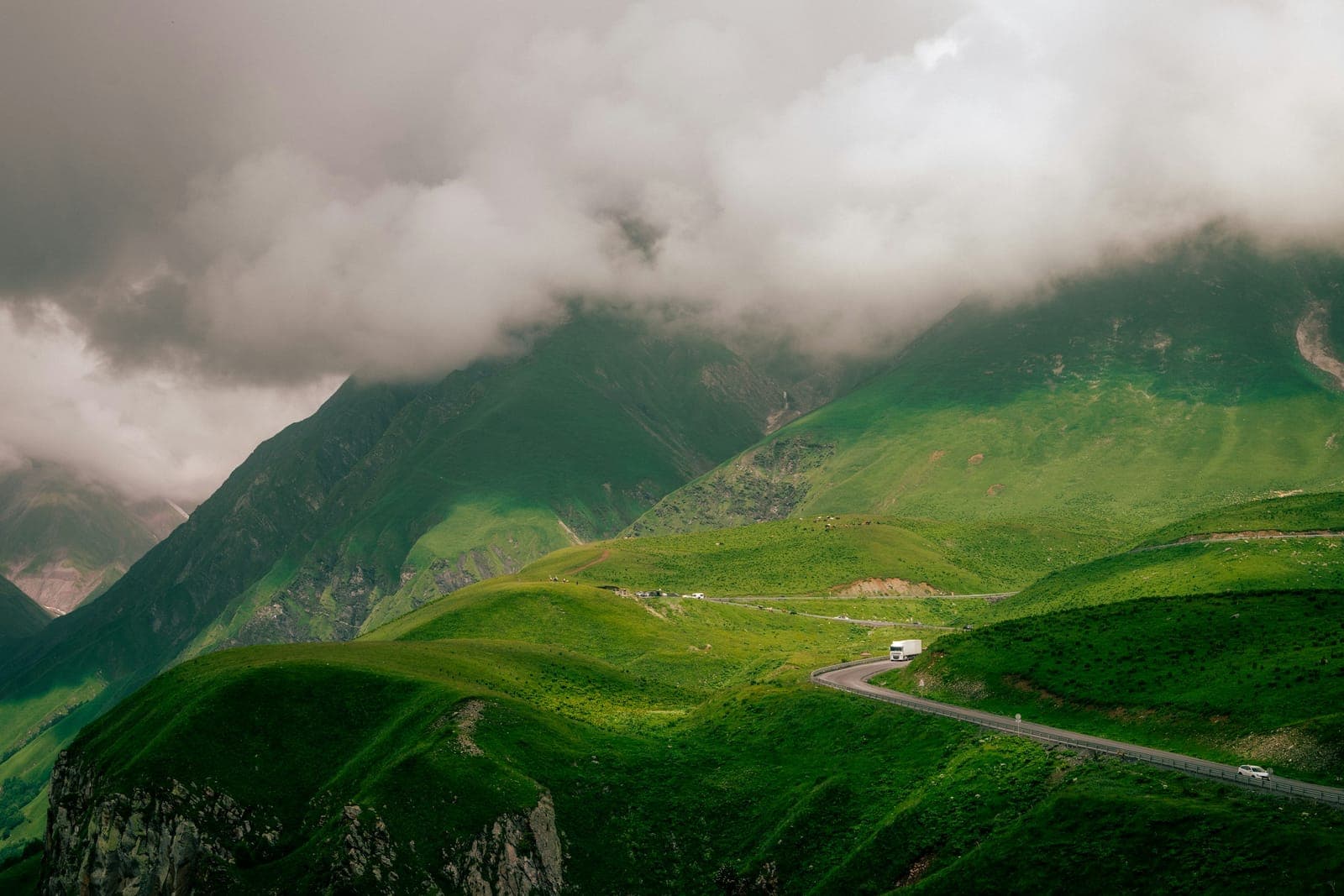
Ask ten travelers why they came to Georgia and half will name this road. The Georgian Military Highway climbs 155 km from Tbilisi to Stepantsminda, tracing river valleys past a turquoise reservoir, a medieval fortress, a ski resort and a 2,395-metre pass before dropping into the valley under Mount Kazbek. It is the best single day of driving in the country - and one of the best anywhere. This guide covers every stop worth your time, honest timing, what the border truck queue means for you, and the car that makes the day easy. Updated for July 2026.
First, the name. The 'Military Highway' is the historic imperial road over the Caucasus from Tbilisi to Vladikavkaz, and the name simply stuck. Today it is an ordinary numbered route: a fully asphalted two-lane road, toll-free, open year-round, shared by tour vans, local Ladas and international trucks. You don't need permits and you don't need an off-roader in summer. What you need is a full day, a warm layer and a camera with space on the card.
The drive at a glance
- Distance: 155 km from Tbilisi to Stepantsminda - about 3 to 3.5 hours of pure driving. With stops it's a full day: plan 8 to 10 hours, or better, an overnight.
- Road surface: asphalt the whole way, and the famous climb to Gergeti Trinity Church is now a concrete road any car manages in dry weather.
- Highest point: Jvari Pass, 2,395 m. It's regularly ten degrees colder than Tbilisi, and the weather changes fast even in summer.
- Fuel: fill up in Tbilisi. There are stations in Pasanauri, Gudauri and Stepantsminda, but prices climb with the altitude.
- Documents: license and passport in the glovebox. The road runs toward the Russian border, and side valleys like Truso are border-police zones where the checkpoint will want a look.
Ananuri fortress and the Zhinvali reservoir (66 km)
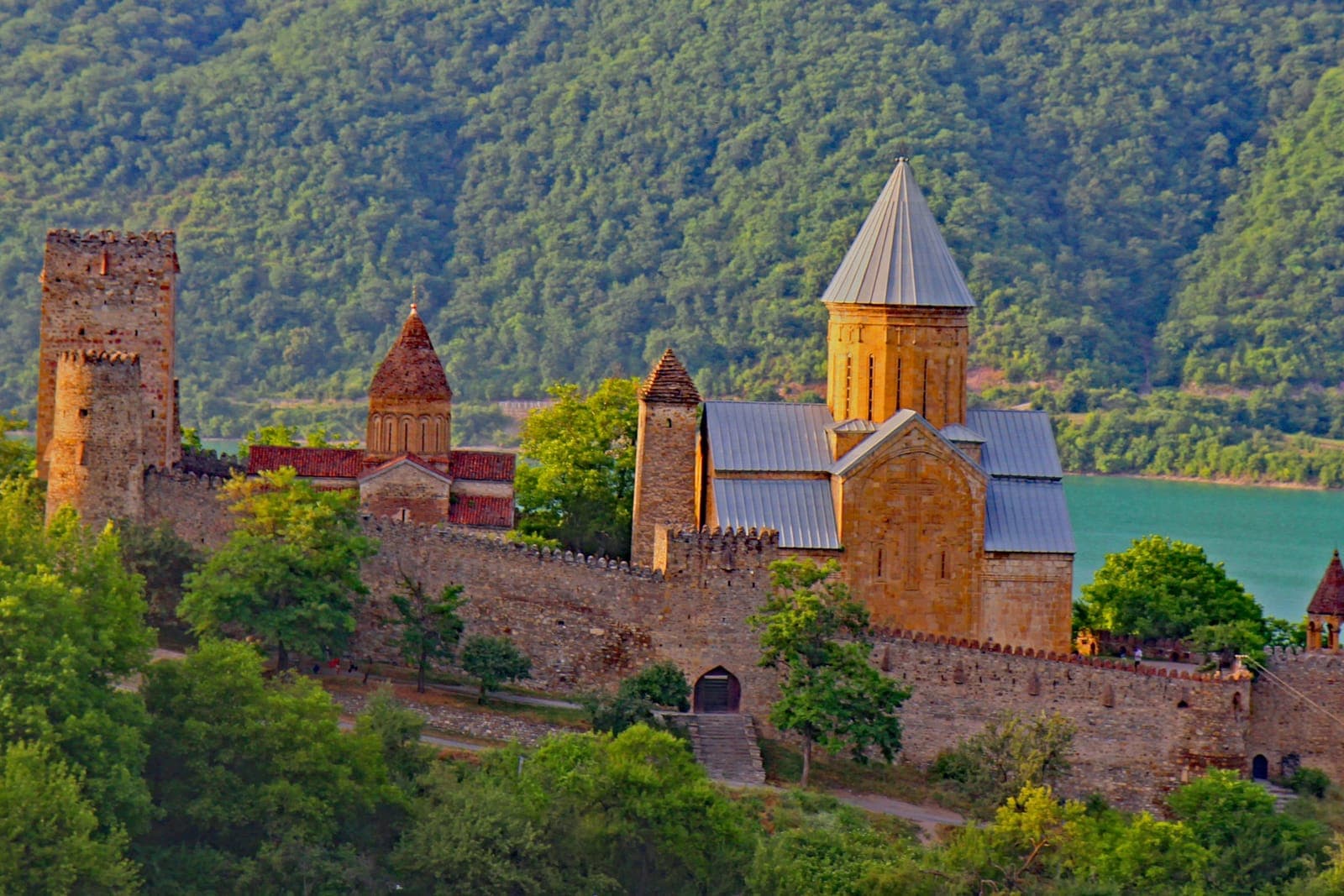
An hour from the city the road swings around a bend and the water appears: the Zhinvali reservoir, a shade of turquoise no photo filter is responsible for. On its shore stands Ananuri, the fortress of the Aragvi dukes - crenellated walls, two churches and a watchtower you can climb for the postcard shot over the lake. The carved facade of the larger Church of the Assumption is one of the finest in Georgia. Parking by the gate is free, entry is free, and 45 minutes covers it. One habit worth forming here: this is the last calm, flat stretch of the day, so check your fuel and coffee levels before the mountains begin.
Pasanauri: khinkali where it was invented (90 km)
Half an hour on, the valley narrows and the roadside fills with guesthouses and grills: Pasanauri, the mountain village credited as the birthplace of khinkali. Purists say the mountain original - thick dough, plain meat, no greens - is the only true version, and this is the place to judge for yourself. Even if it's too early for a dumpling stop, pull over where the White and Black Aragvi rivers meet below the village: the two streams run side by side in one channel, visibly two-tone, refusing to mix for a kilometre.
Gudauri and the Friendship Monument (120 km)
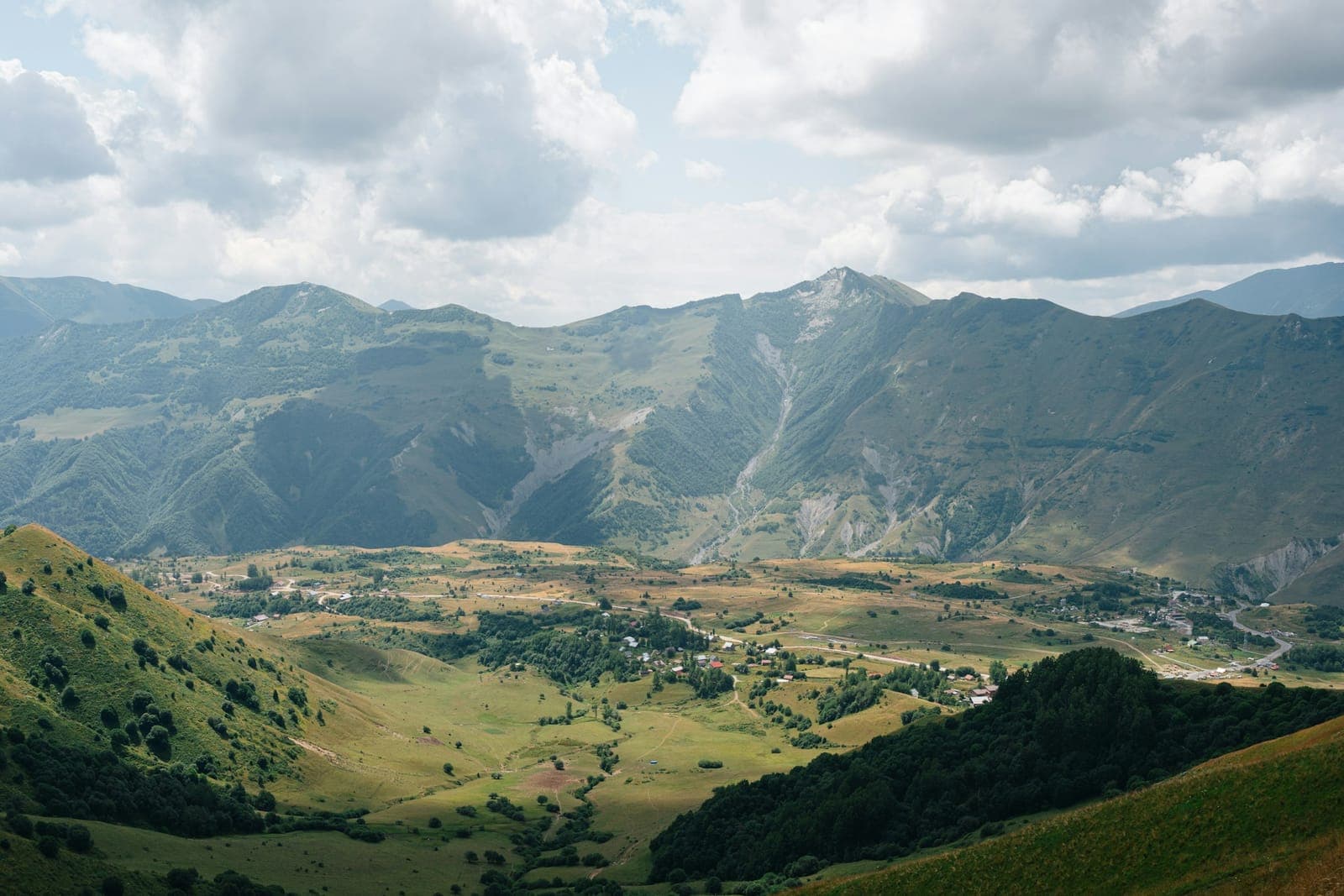
Now the road starts working: hairpin over hairpin up treeless slopes to Gudauri, Georgia's biggest ski resort, sprawled at 2,000 metres. In summer it's a quiet strip of hotels - the reason to stop sits just above the resort. The Friendship Monument, a giant curved wall of Soviet mosaic from 1983, hangs on the rim of a cliff over the Devil's Valley, and the drop behind its balustrade is genuinely dizzying. Paragliders launch tandem flights from the slope beside it all summer; if you've ever wanted to see the Caucasus from a harness, this is the easiest yes of your trip.
Jvari Pass and the mineral travertines (2,395 m)
A few minutes past Gudauri the road tops out at Jvari Pass - Cross Pass, after the stone cross that has marked the summit for centuries. This is the highest point of the drive and the coldest: even in July, put the layer on before you get out. Just past the top, orange-red terraces spill down the hillside on the left - mineral travertines built up by naturally carbonated springs. You can taste the fizzy, iron-heavy water where it emerges; locals fill bottles, and you should at least fill a cup. From here it's all downhill, literally: the Tergi valley opens below and the wall of the high Caucasus fills the windscreen.
Stepantsminda and Gergeti Trinity Church (155 km)
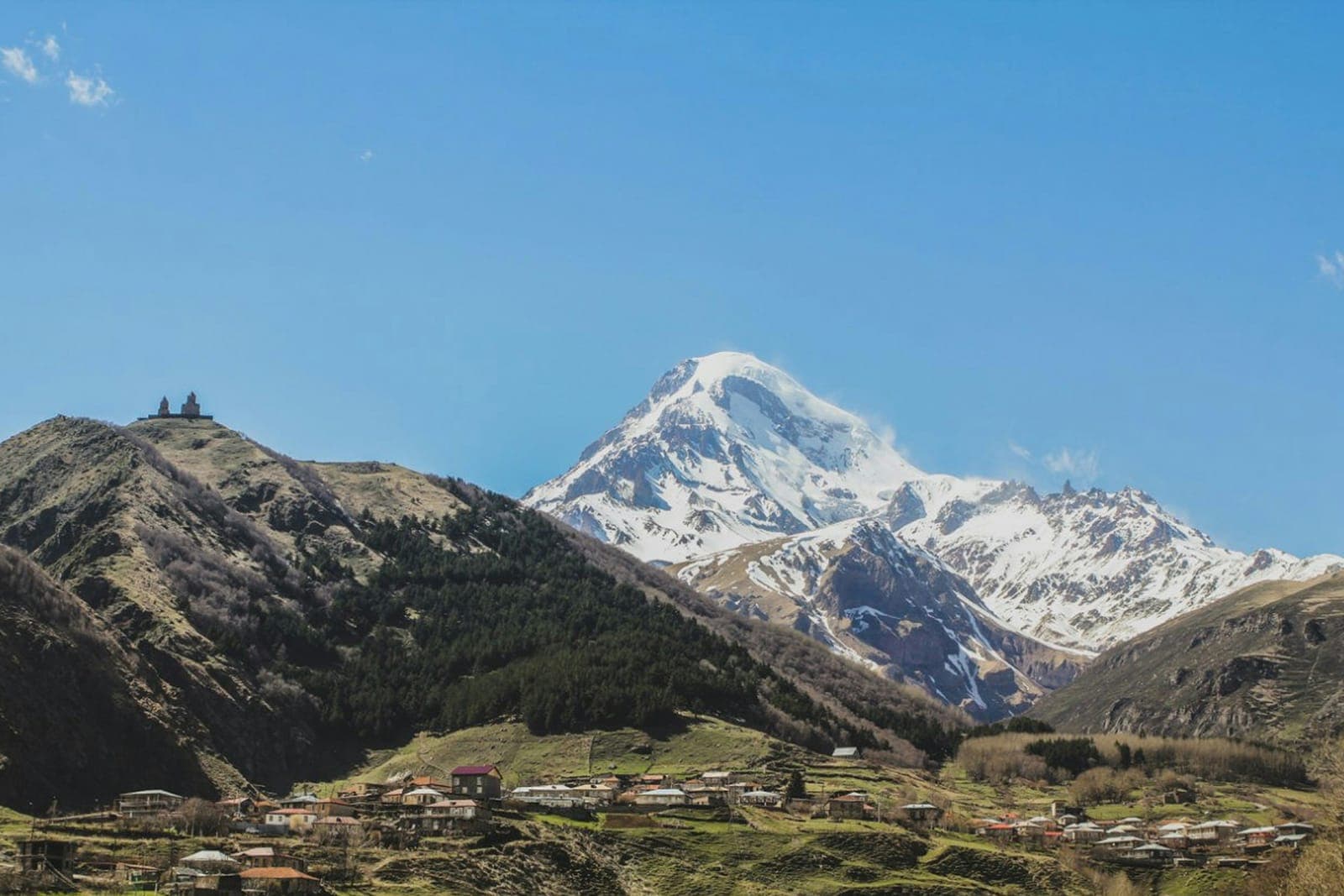
The road drops through Kobi, past the turnoff to the Sno valley, and delivers you into Stepantsminda - everyone still calls it Kazbegi - the town at 1,740 metres under the wall of the Caucasus. Above it, on a bare green ridge at 2,170 metres, stands the reason you drove all day: Gergeti Trinity Church, a 14th-century silhouette set against the 5,047-metre cone of Mount Kazbek. It is the image on half the covers of Georgia guidebooks, and it is better in person.
Getting up is the easy part now: the once-notorious jeep track is a concrete road, about six kilometres of switchbacks from the town square, and any rental manages it in dry weather (the full story is in our route-by-route 4x4 guide). Prefer to earn it? The walking trail through Gergeti village and the forest takes about an hour and a half, steep and worth it. Time the visit for late afternoon if you're staying the night - the tour groups drain away, the light goes gold, and Kazbek sometimes reappears for sunset after hiding all afternoon.
If you have another hour: Dariali Gorge and the Gveleti waterfalls
Past Stepantsminda the highway runs twelve more kilometres to the Russian border through the Dariali Gorge, the granite slot that armies and traders have squeezed through for two thousand years - the walls close in until the sky is a strip. Park at the marked trailhead for the Gveleti waterfalls: an easy 20-30 minute walk brings you to the smaller fall, a rockier scramble to the big one. Turn around at the modern monastery complex before the border post. This last stretch is also where the truck queue lives - which deserves its own explanation.
Day trip or overnight?
As a day trip it's a 10-12-hour round: entirely doable, and thousands do it every summer week. But if your itinerary has any give at all, sleep in Stepantsminda. You get Gergeti in golden evening light after the day-trippers leave, Kazbek at dawn when it is clearest, and a free morning for the valleys the buses never reach: gravel Truso, with its travertine terraces and half-abandoned villages, or Juta, the trailhead under the spiky Chaukhi massif. Both feature in our 7-day Georgia itinerary, and both are mornings where a 4WD earns its keep. On the way to Juta, pause in Sno village to meet the giant carved stone heads of Georgian poets staring across the meadow.
When to go - and what about winter?
June to September is prime: everything open, meadows green, gravel side valleys dry. October adds gold to the slopes and thins the crowds. The highway itself is a year-round artery, but winter plays by mountain rules: Jvari Pass closes temporarily during and after heavy snowfall - sometimes for hours, sometimes a day - winter tires are legally required on the mountain sections from December to March, and chains can be mandated on the pass itself. Gudauri sits on the Tbilisi side of the pass, so ski trips get through even when the road beyond is shut. If you're driving in winter, check the road status before leaving and build slack into the plan.
Which car should you rent for it?
In dry summer weather, any car in our fleet handles Tbilisi to Stepantsminda and the concrete road up to Gergeti - including our one 2WD, the fuel-sipping Toyota Prius. That said, this is the route where we recommend 4WD to almost everyone: the best side mornings (Truso, Juta) are gravel, village streets fray at the edges, and mountain weather doesn't read forecasts. A compact 4WD SUV - the Jeep Renegade, Subaru XV Crosstrek or the roomier Subaru Forester - is the sweet spot for this drive. Going in winter, or bolting on something genuinely rough like Tusheti? Skip straight to the Toyota 4Runner or Land Cruiser Prado and stop thinking about the road surface altogether. Every car comes with no deposit and free cancellation.
Two short reads before you set off: driving in Georgia covers the rules, cameras, fuel stations and the local overtaking style, and who can rent a car in Georgia settles the license and age questions in two minutes. Then set the alarm, beat the tour vans out of the city, and drive the road people cross continents for.
Frequently asked questions
How long does the drive from Tbilisi to Kazbegi take?
The 155 km take about 3 to 3.5 hours of pure driving - hairpins, viewpoints, cows and crawling trucks see to that. With the stops that justify the trip, plan a full 8-10-hour day, and leave the city by 9:00 to catch Mount Kazbek before the afternoon cloud.
Is the Georgian Military Highway dangerous to drive?
No - it's a paved, guardrailed, maintained road that thousands drive daily. It is still a real mountain road: hairpins, blind bends, trucks, fog on the pass and the occasional cow. A calm driver who doesn't rush overtakes has no problem in summer. Winter is a different discipline - see the winter section above.
Can a regular car drive up to Gergeti Trinity Church?
Yes. The old jeep track is now a concrete road, about six kilometres of switchbacks from Stepantsminda, and any rental car manages it in dry weather. In snow or ice it's 4WD territory. Prefer to walk? The trail through Gergeti village takes about 1.5 steep hours each way.
Do I need a 4x4 for the Military Highway?
Not for the main road in summer - it's asphalt end to end. We still recommend a 4WD SUV to almost everyone: the best side trips (Truso, Juta) are gravel, and the extra clearance keeps the whole day relaxed. The route-by-route logic is in our 4x4 guide.
Is the road open in winter?
The highway works year-round, but Jvari Pass closes temporarily during and after heavy snowfall. Winter tires are legally required on mountain sections from December to March, and chains can be mandated on the pass. Gudauri lies before the pass on the Tbilisi side, so ski trips usually get through even when the road beyond is closed. Check the road status on the day you travel.
Do I need my passport for this drive?
Carry it. The main road needs nothing special, but the best side valleys sit in border-police zones: the Truso Valley checkpoint routinely checks passports, and patrols near Dariali can too. Passport plus driving license in the glovebox is the rule for the whole Kazbegi region.
Planning a trip to Georgia? Pick your car and drive worry-free.
Browse the fleetSimilar posts
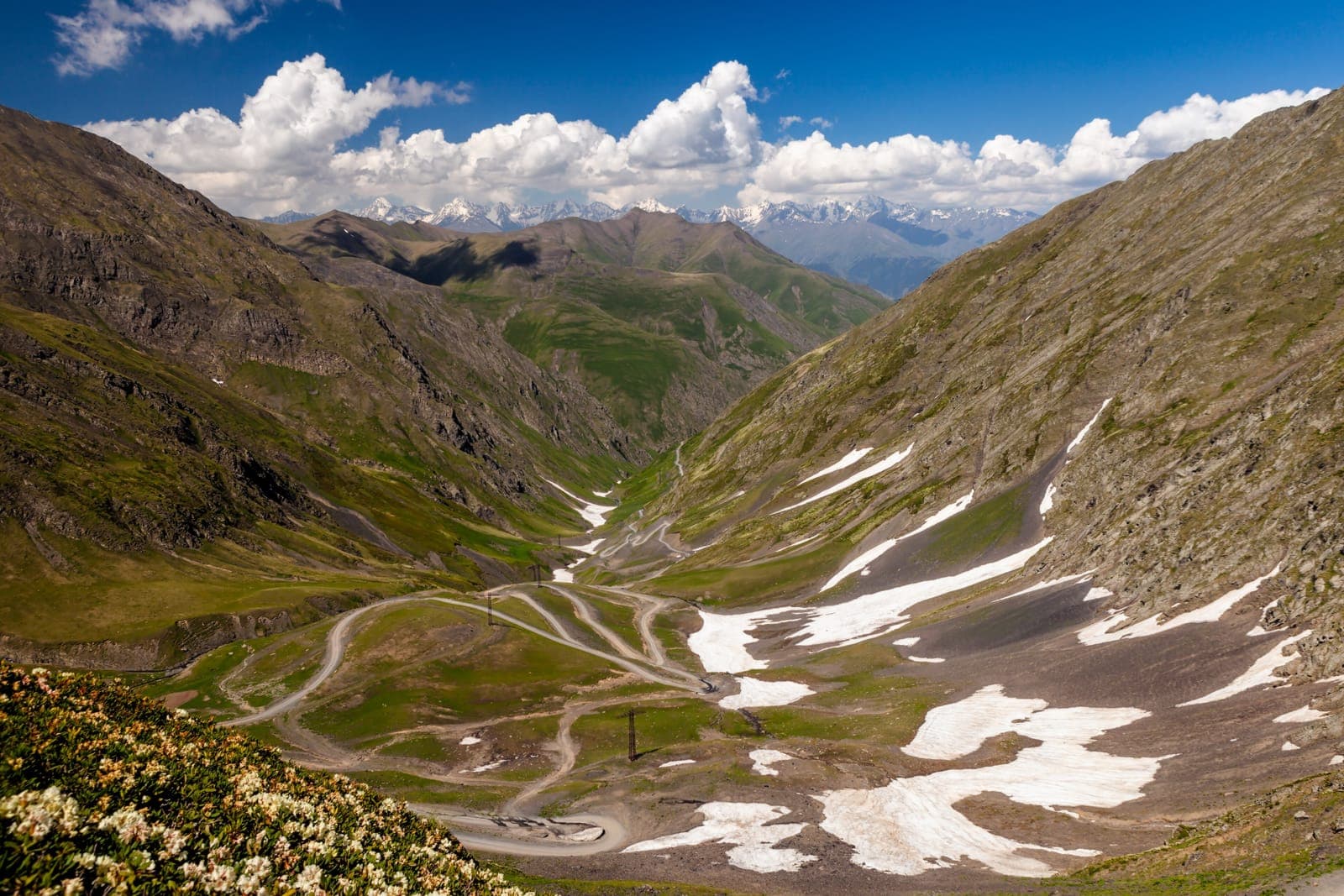
Driving to Tusheti: The Abano Pass, Honestly (2026)
What the Abano Pass road to Tusheti is really like: the seasonal window, the true 4x4 you need, when to hire a local driver, and how to rent the right car in Georgia.
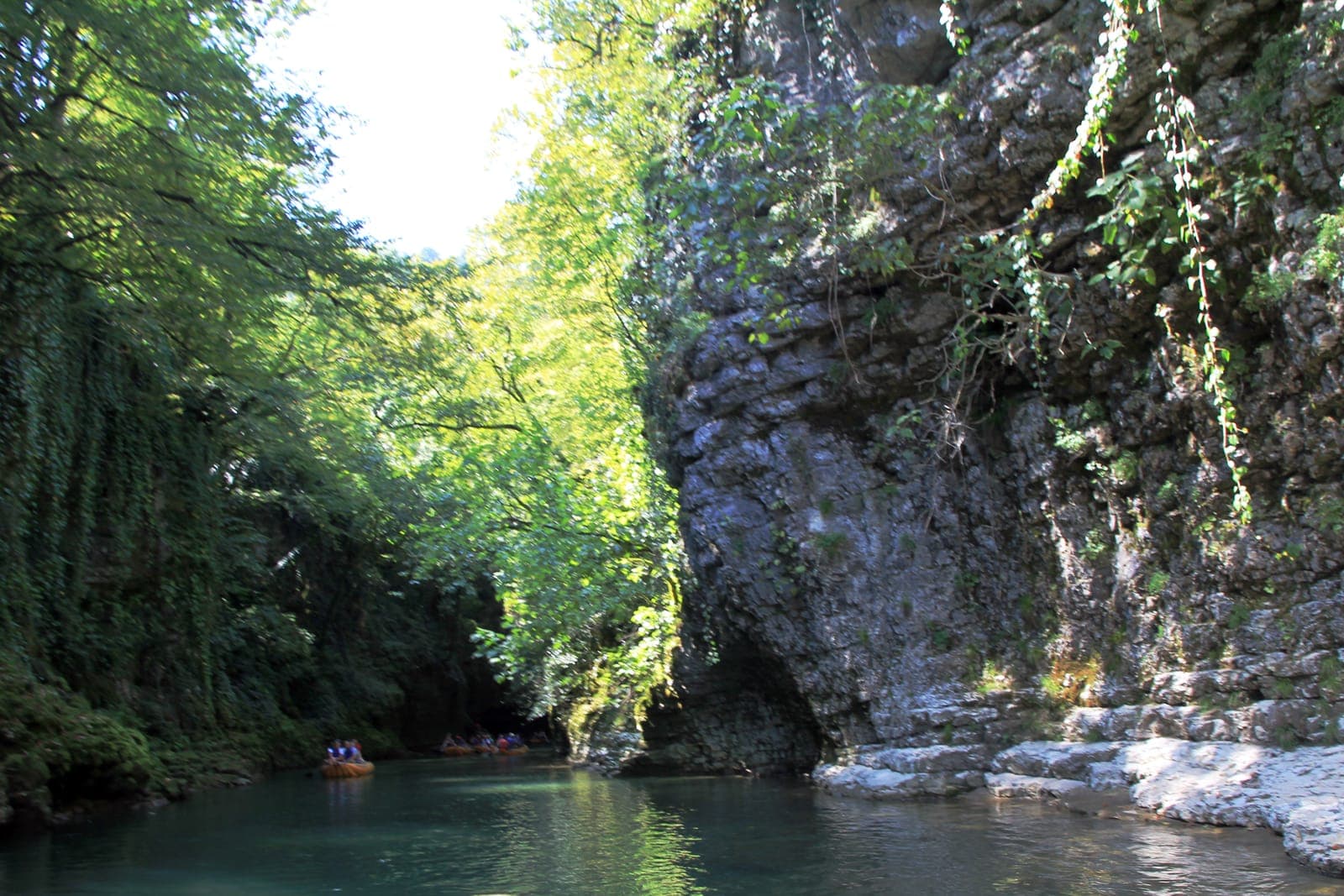
Flying into Kutaisi: Canyons, Caves and Waterfalls by Rental Car
Landed at Kutaisi airport on a budget flight? Rent a car in Georgia and spend 1-3 days on Martvili, Okatse, Prometheus Cave, Gelati and Tskaltubo. 2026 guide.
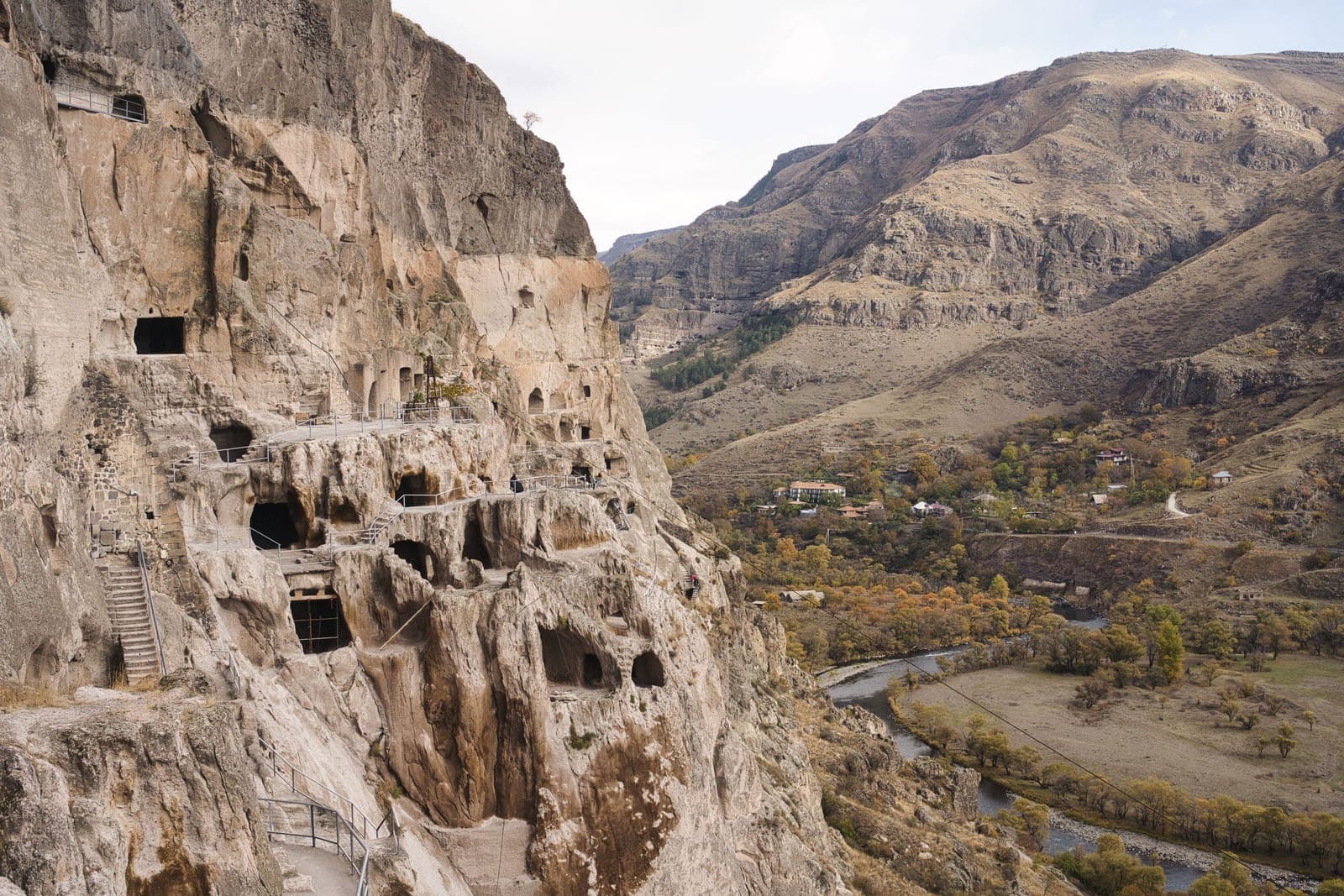
Vardzia, Rabati and Borjomi: Georgia's Southern Route by Car (2026)
Drive Georgia's southern route: Borjomi's springs, Rabati fortress and the Vardzia caves in two days. Roads, entry fees and the right rental car for 2026.